

NIST Releases New Forensic Genetic Reference Material to Help Crime Laboratories Analyze Challenging Cases
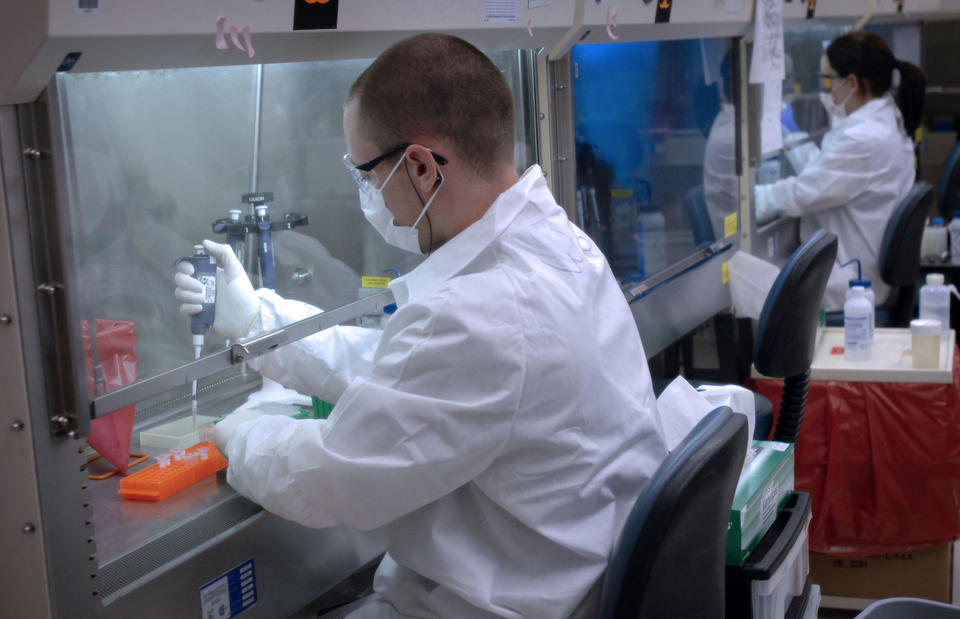
A forensic DNA analyst prepares a sample for analysis.
Credit: Fred W. Baker/Department of Defense
The National Institute of Standards and Technology (NIST) has released a new forensic DNA reference material, RM 8043, that includes degraded DNA as well as mixtures of high-quality DNA from multiple individuals. This material will help crime labs verify that their methods produce accurate results when analyzing these kinds of samples.
Genetic material at a crime scene often includes DNA from more than one person. The NIST samples can help train forensic analysts to more easily recognize the presence of DNA contributed by multiple people — especially in challenging cases where only trace amounts of DNA are present or the DNA has been degraded due to the passage of time or exposure to the elements.
If an individual leaves DNA behind while committing a crime, forensic analysts can use it to create a DNA profile, or genetic fingerprint, of the suspect. NIST already produces genetic reference materials to help laboratories ensure that their genetic profiling methods produce accurate results. However, those reference materials are made with relatively pristine DNA, meaning DNA that has not been degraded due to environmental exposure, and they do not include mixtures of DNA from more than two individuals.
As forensic techniques have become much more sensitive — capable of detecting even trace amounts of DNA — crime labs have been analyzing more samples that contain degraded DNA or DNA mixtures. These samples can be much more difficult to interpret.
The new release provides laboratories with updated reference material that reflects the more complex and challenging nature of the crime-scene evidence they now often analyze.
The reference material consists of eight vials of DNA from anonymous individuals who consented to its use for research. Six vials contain high-quality DNA from single individuals or mixtures of two or three people. Two vials contain degraded DNA from two of those individuals.
Credit: NIST
Researchers at NIST degraded the reference material in a controlled manner, fragmenting the samples by irradiating them with ultraviolet light for a set amount of time.
DNA tests typically require only about half to one nanogram (millionth of a gram) of DNA, but the vials contain close to 900 nanograms.
“We’ve given laboratories a surplus of what they need, so that they can use the samples at many different times during DNA analysis or use them repetitively as part of a training set for forensic analysts,” said NIST researcher Erica Romsos.
The reference material comes with a data sheet that lists the genetic profiles of the people who contributed their DNA. This information enables DNA laboratories to use the material to test the accuracy of their equipment, support the development of new methods of genetic analysis, test the accuracy of software, and train analysts. If a laboratory’s analysis of the NIST samples matches the data on the NIST data sheet, its analysts can be more confident that they will correctly interpret DNA gathered from an actual crime scene.
“These samples act as ground truth,” said NIST researcher Peter Vallone, an expert on DNA analysis. “Genetics laboratories can use the samples to kick the tires and make sure that a new instrument or technology is working as it should.”
Before releasing the new reference material in late December, NIST scientists confirmed the usefulness of the samples by distributing them to about 100 forensic laboratories for testing.
This material was developed as part of NIST’s Forensic Science Research Program, which works to advance disciplines including forensic genetics, fingerprint analysis, ballistics, digital forensics, forensic chemistry and others.
These efforts are critical for helping ensure justice for crime victims and their families as well as those accused of crimes.
Legal Disclaimer:
EIN Presswire provides this news content "as is" without warranty of any kind. We do not accept any responsibility or liability for the accuracy, content, images, videos, licenses, completeness, legality, or reliability of the information contained in this article. If you have any complaints or copyright issues related to this article, kindly contact the author above.
