

Cadets Explore Human-Machine Teaming Through Hands-on Research
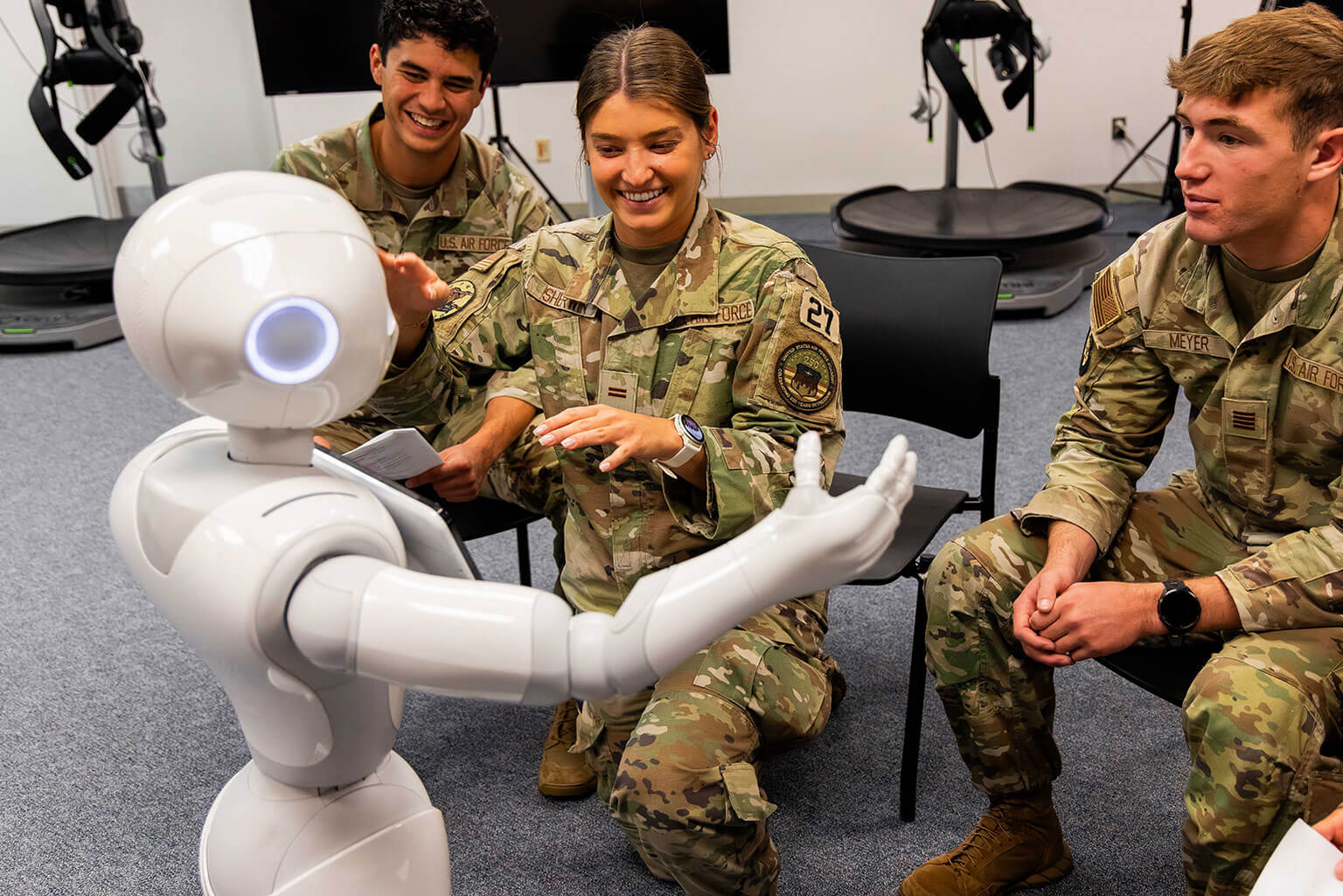 Cadets interact with Pepper, a humanoid robot, at the Warfighter Effectiveness Research Center at the U.S. Air Force Academy, Colo., Oct. 14, 2026. Researchers use Pepper to study human-machine teaming and how people interact with autonomous and artificial intelligence-enabled systems. (U.S. Air Force photo by Trevor Cokley)
By SSgt Michael Ward U.S. Air Force Academy Strategic Communications
U.S. AIR FORCE ACADEMY, Colo. –U.S. Air Force Academy cadets are exploring how emerging technologies influence human behavior and decision-making through hands-on research with humanoid robots and robotic dogs.
The research gives cadets opportunities to apply academic knowledge to practical challenges and examine how they may work alongside increasingly autonomous systems as future officers.
At the Academy’s Warfighter Effectiveness Research Center (WERC), faculty and cadets study how people interact with robotic teammates, including how trust, communication and cooperation influence human-machine teaming.
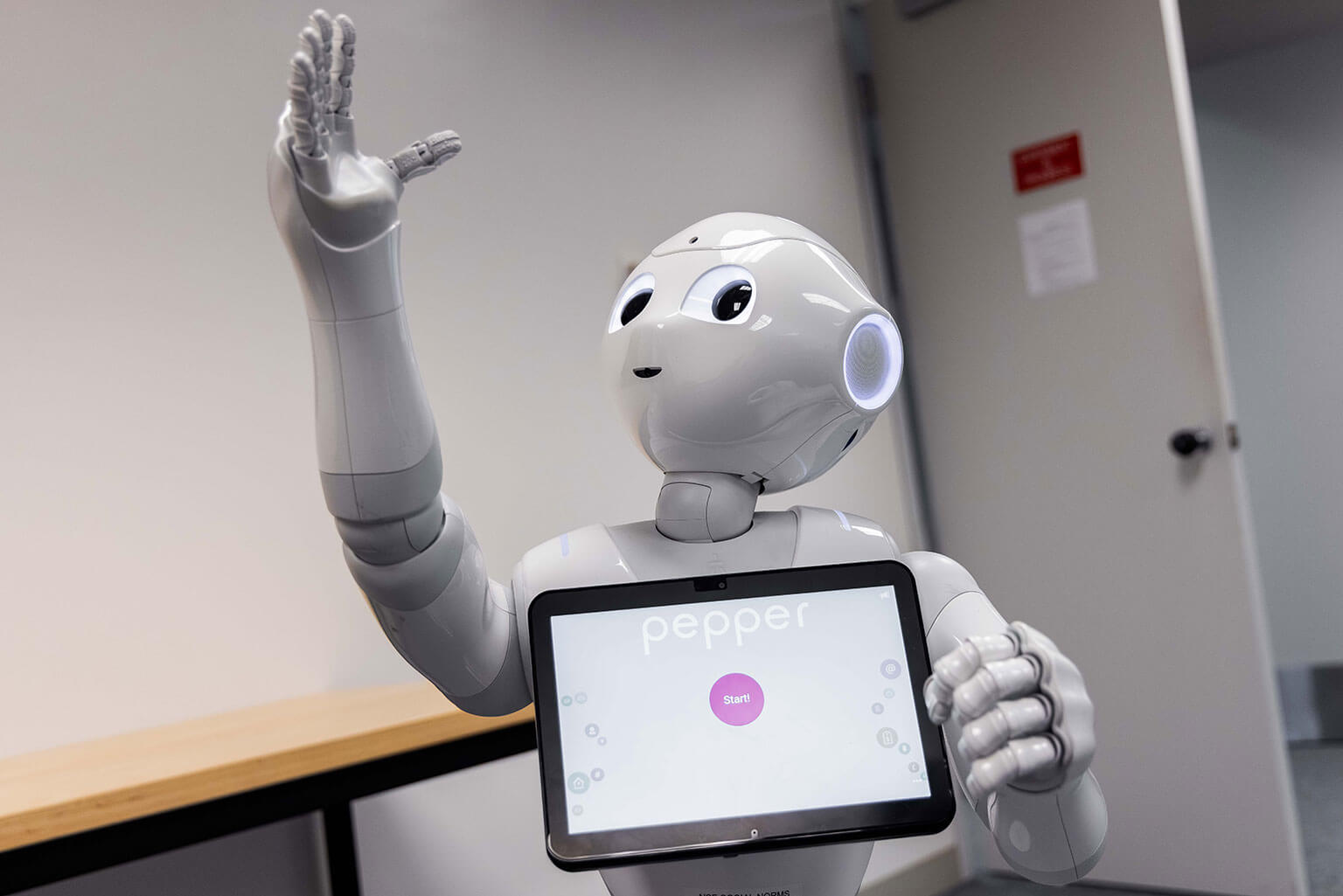 Pepper, a humanoid robot, stands at the Warfighter Effectiveness Research Center at the U.S. Air Force Academy, Colo., Oct. 14, 2026. Researchers use the robot to study human-machine teaming, including how people communicate and coordinate with autonomous systems. (U.S. Air Force photo by Trevor Cokley)
Studying human behavior through robotics
The Department of Behavioral Sciences and Leadership uses three robotic platforms to study how people interact with increasingly autonomous teammates: SoftBank Robotics’ Pepper humanoid robot and two quadruped robots, Ghost Robotics’ Vision 60 and Boston Dynamics’ Spot.
Dr. Richard Niemeyer, an associate professor in the department and director of WERC, said the research examines what makes human-machine teams effective, what causes them to fail and how those dynamics change as teams expand to include people, artificial intelligence agents and robots.
Pepper’s humanoid appearance, voice and social behaviors may make interactions feel more natural. Robotic dogs present a different dynamic because their appearance may encourage people to interact with them as they would with real dogs.
Those familiar appearances can also create challenges if people overestimate a robot’s capabilities or accept its recommendations without questioning them.
Cadets investigate these interactions through controlled experiments examining how a robot’s appearance, communication style, reliability and level of autonomy affect human decisions. Researchers study trust, reliance, workload and team performance to better understand how robotic teammates influence outcomes.
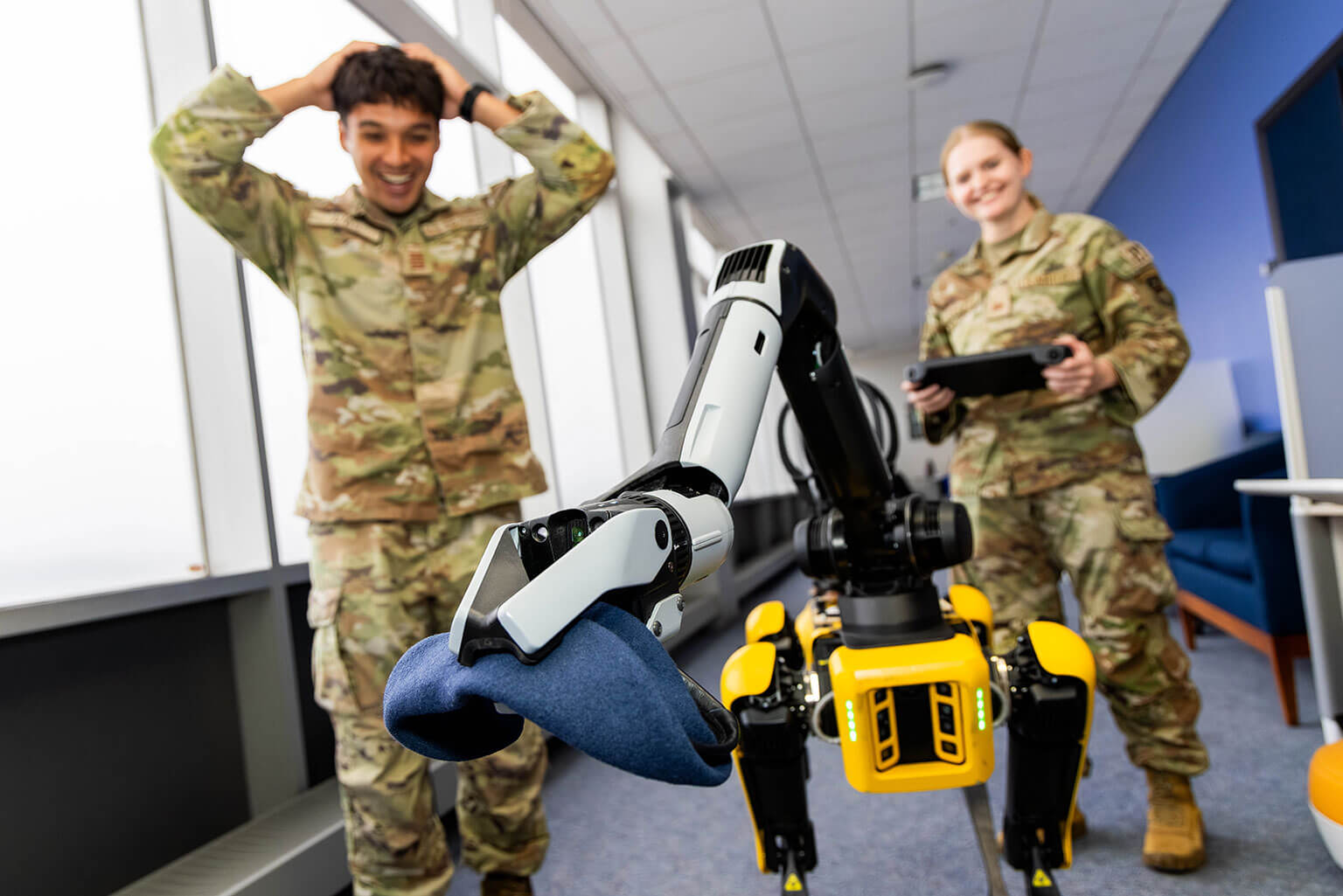 Cadet 1st Class John Alves, left, and Cadet 1st Class Jessica Cianfaglione, right, operate a robotic dog using a remote controller at the U.S. Air Force Academy, Colo., Oct. 14, 2026. The research gives cadets hands-on experience working with robotic systems and exploring their applications. (U.S. Air Force photo by Trevor Cokley)
Examining trust and robotic influence
Cadet 1st Class Kaylin Chan, a behavioral sciences major with a minor in Chinese, is training to assist with research on human-robot interactions.
The research uses the Dexmate Vega robot and functional near-infrared spectroscopy (fNIRS), a wearable technology that measures changes associated with brain activity.
In one experiment, participants work with a robotic teammate to prioritize supplies in a simulated desert survival scenario. Researchers vary how the robot attempts to influence their decisions, including presenting itself as an expert or applying pressure to persuade participants to change their choices.
The research examines how robotic teammates influence human decisions and whether that influence improves or undermines the outcomes.
“One of the biggest things I’ve learned is that human behavior is often more complicated than what we study in the classroom,” said Chan.
Researchers combine observations of human behavior with measurements of brain activity to better understand why people follow robotic recommendations. Agreeing with a robot does not necessarily indicate trust; a person’s decision could also reflect pressure or uncertainty. Studying both behavior and brain activity may help researchers distinguish between those responses.
Chan said the experience has changed how she thinks about using autonomous systems and leading teams in future military operations.
“I don’t necessarily need to be an expert in building AI or robots, but I do need to understand how to use them effectively, recognize their limitations and help the people I lead work alongside them,” said Chan.
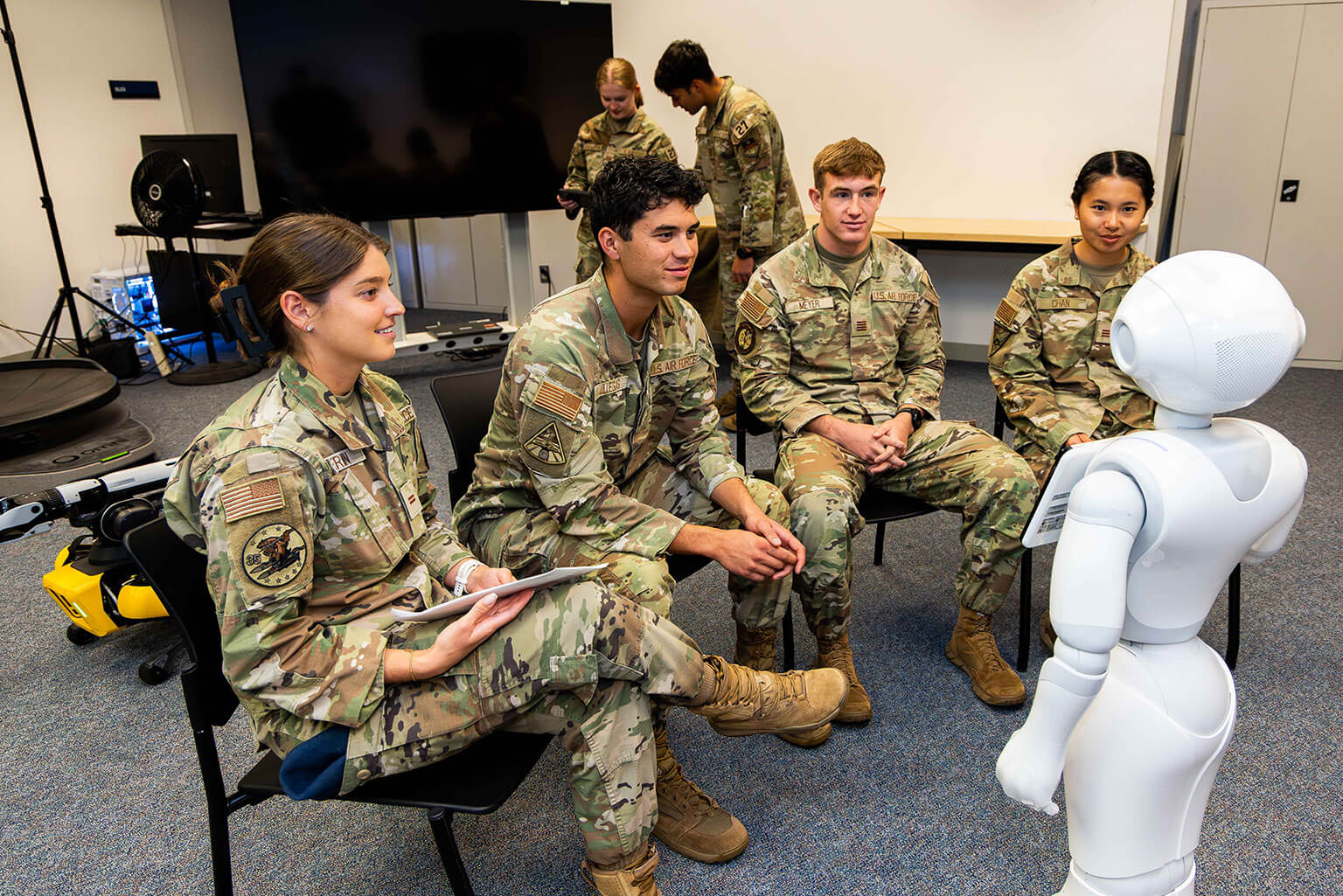 Cadets work with Pepper, a humanoid robot, at the Warfighter Effectiveness Research Center at the U.S. Air Force Academy, Colo., Oct. 14, 2026. The research gives cadets hands-on experience studying human-machine teaming and how emerging technologies may influence future military operations. (U.S. Air Force photo by Trevor Cokley)
Applying engineering to human-machine teaming
Cadet 1st Class John Alves, an electrical and computer engineering major, brings a technical perspective to the research. He helped establish research operations at WERC and supported a biofeedback study, troubleshooting equipment while working directly with participants.
Troubleshooting required Alves to consider participant safety, research objectives and accurate documentation while resolving technical problems.
“It taught me that research is not just about getting something to work but being thorough about how you do it and documenting what happens so others can learn from it,” said Alves.
Working directly with participants also helped Alves recognize how technical decisions can affect people, reinforcing the importance of considering human factors alongside engineering requirements.
As a future Air Force officer, Alves said he wants to understand how autonomous systems work, recognize their limitations and know when to question their outputs.
“As a future Air Force officer, I want to understand when these systems can help, when to question their outputs, and when human judgment needs to take priority,” said Alves.
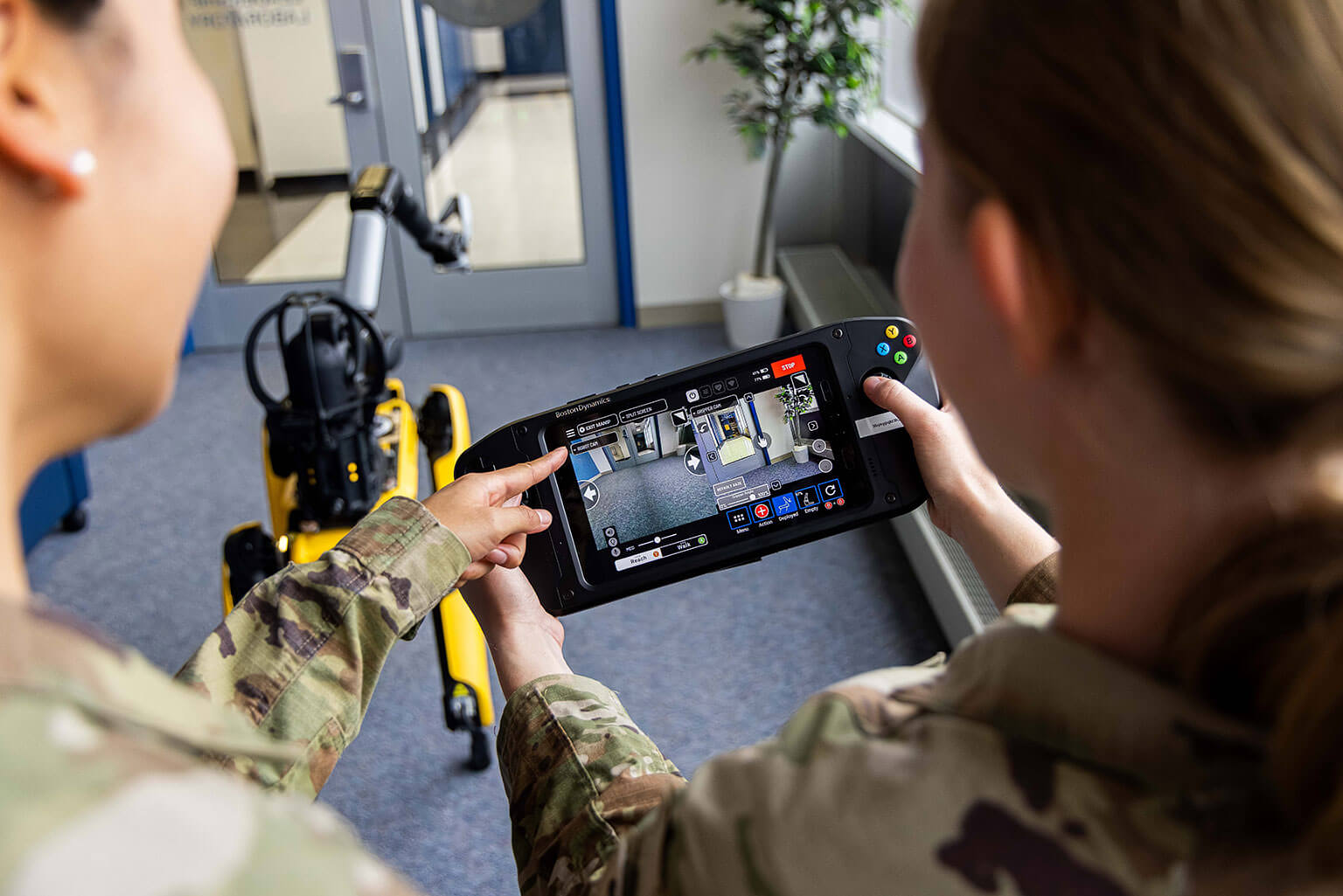 Cadets operate a robotic dog using a remote controller at the U.S. Air Force Academy, Colo., Oct. 14, 2026. The hands-on experience allows cadets to explore controlling robotic systems and their potential applications. (U.S. Air Force photo by Trevor Cokley)
Preparing cadets for future operations
The research combines behavioral and biological sciences, engineering, computer science, mathematics and ethics. Cadets apply knowledge across disciplines to develop research questions, design experiments and interpret results.
Niemeyer said the research challenges cadets to solve problems without clear answers or established solutions. “They have to identify what they know and what they do not know, formulate questions, test possible solutions, deal with unexpected results and failures and change course when the evidence requires it,” said Niemeyer.
These experiences reflect challenges officers may face when working with incomplete information, coordinating across specialties and making decisions in changing environments.
Future research could explore whether combining robotic platforms with wearable fNIRS technology would help machines recognize when human teammates are experiencing cognitive overload. Researchers hope to determine whether that information could help autonomous systems adjust how and when they provide assistance.
As autonomous systems take on greater roles in military operations, WERC’s research helps cadets understand how human judgment and technology influence team performance.
Legal Disclaimer:
EIN Presswire provides this news content "as is" without warranty of any kind. We do not accept any responsibility or liability for the accuracy, content, images, videos, licenses, completeness, legality, or reliability of the information contained in this article. If you have any complaints or copyright issues related to this article, kindly contact the author above.
